Virtual Reality for Wellbeing: Apax Helps to Lead the Way with Insight | Journal of mHealth
Why honest feedback and clear measures help digital wellbeing programmes stay focused on people
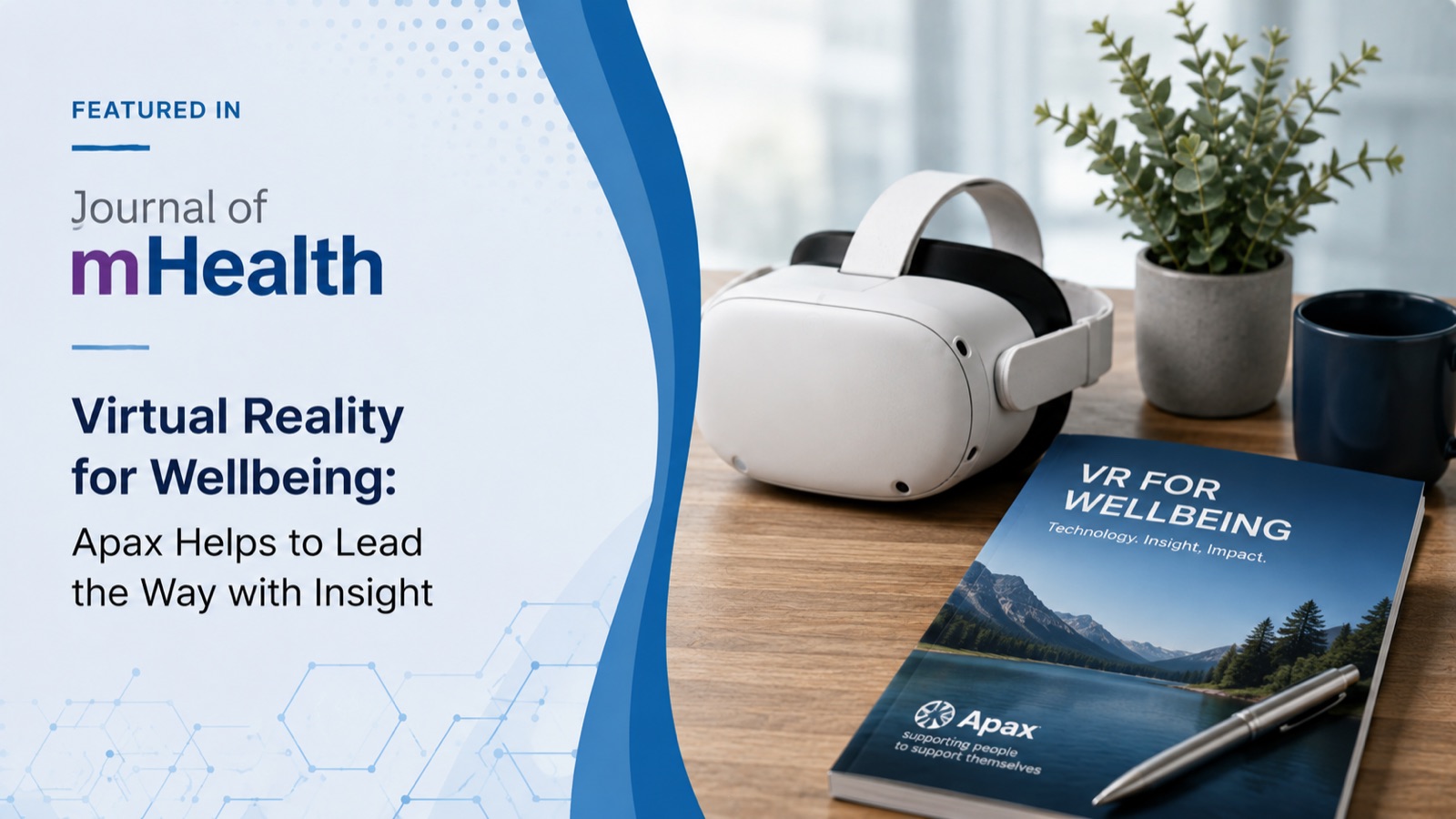
On 20 September 2024, the Journal of mHealth published a case study on the VR Wellness Programme at Apax, a supported housing social enterprise in Lewisham, South East London, delivered with the technology partner Insight. Written by Davi De Andrade of Insight, it set out what the programme aimed to do and what residents and staff reported. The case study set out the challenge, the solution and the outcome in turn.
Results like these invite an important question for anyone working in digital health. How do we know whether something is truly helping, and how do we listen well enough to find out? The answers are rarely simple, but asking them honestly is always worthwhile.
The Case Study in Brief
The case study described Apax as supporting more than 140 residents in London who have experienced homelessness and mental health issues. Its services aim to empower independent living and social cohesion. Its work combines a home with practical, everyday support.
Having completed a digital transformation, Apax explored how immersive technology could improve residents' mental wellbeing. It chose Meta Quest 2 headsets and, on Insight's recommendation, the TRIPP wellness platform, as a complementary recovery programme alongside traditional methods. Insight, a solutions integrator, helped with the roll-out.
According to the charity Crisis, as reported in the case study, 45% of people experiencing homelessness have been diagnosed with a mental health issue, rising to 80% for rough sleepers. That context is why measuring wellbeing carefully matters.
What Residents and Staff Reported
The case study shared four headline results. Every resident and staff member reported positive impacts, including stress reduction and mood improvement, and the project met or exceeded all resident and staff expectations.
Residents' management of social anxiety improved by 36%, according to the case study. In addition, 80% found the technology easy to use from the beginning, thanks to workshops and training demonstrations.
Figures like these are encouraging, and they are shared with thanks to everyone who took part. They are also best seen as a starting point for further learning rather than a final word. Each number reflects real people and real experiences behind it.
Why Measuring Wellbeing Is Hard
Wellbeing is personal and changes from day to day. It cannot be checked with a single test, and two people can describe the same feeling in very different ways. What feels like progress to one person may look quite different to another.
That makes measurement both difficult and essential. Without it, good intentions can drift away from what people actually need. With it, programmes can adjust, improve and be honest about their limits. Clear measures also make it easier to explain what a programme does and why.
Thoughtful evaluation usually draws on several kinds of evidence. Numbers show patterns, while conversations explain them. Neither tells the whole story alone, which is why listening sits at the heart of good measurement.
Feedback as Part of the Programme
Asking for feedback is easiest when it feels natural rather than formal. A short reflection after a session, or a relaxed chat with a key worker, can capture how someone is feeling without adding pressure. Feedback works best when people trust that it will be heard and acted upon.
For readers curious about the technology behind this kind of programme, our article on immersive technology for mental health explains how immersive experiences can encourage a calmer state of mind.
Whatever the tool, the principle stays the same. People using a service are the best judges of whether it helps them, and their voices deserve a central place in any evaluation.
Freeing Time for Support
The case study noted that key workers had historically needed to complete time-consuming, paper-based reports after every session. Because the programme was built on a digital platform, that paper-based reporting was eliminated.
This matters for evaluation as well as efficiency. When recording is simpler, key workers can spend more time with residents, and information can be easier to review and learn from.
Good measurement should never become a burden that draws people away from the relationships it is meant to strengthen. Lighter recording helps keep attention where it belongs. The aim is to understand people better, not to fill in more forms.
Keeping the Goal in View
Israa Qaddourah, Project Manager at Apax, said in the case study: “Every one of our residents has the potential to live independently one day.” That belief shapes what success looks like.
Measured against that goal, wellbeing is not an end in itself. It is the foundation for confidence, skills and the steady progress that makes independent living possible. Measuring wellbeing well means keeping that bigger picture in view.
The case study also reported that residents developed skills and confidence for a more fulfilling life, alongside reducing stress and managing their mood and depression.
Learning Openly
Sharing results publicly, as the Journal of mHealth has done, helps others weigh the evidence for themselves. It also keeps any programme accountable to the residents it exists to support. Openness of this kind helps the whole field learn faster and more fairly.
Apax is grateful to Insight and to the Journal of mHealth for telling this story, and to every resident and staff member whose honest feedback shaped the results.
You can read the full case study in the Journal of mHealth: Virtual Reality for Wellbeing: Apax Helps to Lead the Way with Insight.